


M-LAG
Author Aiyden
Date 12/06/2024

What is M-LAG?
M-LAG (Multichassis Link Aggregation Group) is a mechanism for achieving multi-chassis link aggregation. By connecting two devices in the same state to the edge device or server for multi-chassis link aggregation, the reliability of link aggregation is elevated to the device level from the card level, forming a double-active system. The two connected physical devices are logically virtualized as one single device. When one device or one link fails, the system can switch to the other device, ensuring uninterrupted service. MLAG has the advantages of increasing bandwidth, improving link reliability and load-balancing, simplifying management, and independent upgrades.
How Does MLAG Form?
The establishment of M-LAG is about the following five steps:
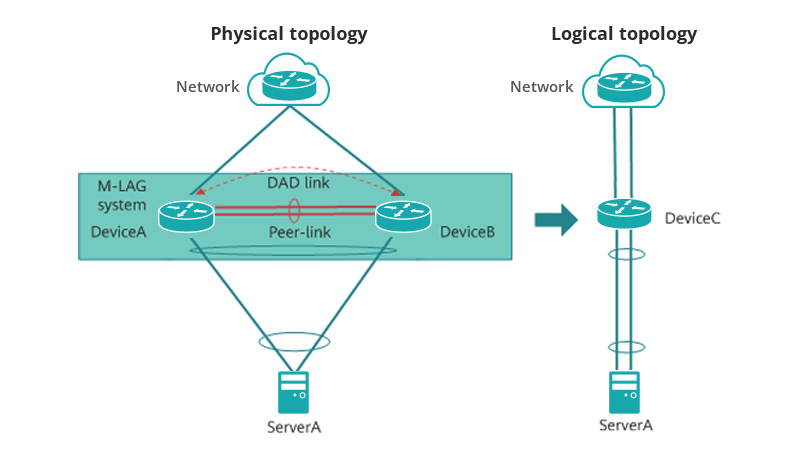
1. Dynamic Fabric Service Group (DFS group) Pairing: After switches A and B are configured, the two switches will forward the hello package of the DFS group through peer-link. Once receiving the package, the peer side will distinguish whether the DFS code carried in the package is identical to the local side. If it does, the two switches will be successfully peered.
2. DFS Group Master/Backup negotiation: After peering, switch A and switch B will send the device information package of the DFS group to each other. The two devices will confirm the master/backup state of the DFS group according to the DFS group priority and the system MAC address loaded in the package. The switch with the higher priority of the DFS group will become the DFS master device. If the priority is the same, the device with a more minor system MAC address will become the DFS master device.
3. M-LAG Membership Interface Master/Backup Negotiation: After the DFS group master/backup negotiation, switch A and switch B will send the MLAG device information package through peer-link. After completing member interface synchronization, the master/backup states of the MLAG members’ interfaces can be defined by checking the MLAG members’ interface information carried in the package. When synchronizing port information with the peer end, the member interface whose status changes from down to up first will become the master MLAG member interface, and the MLAG member port at the peer end will become the back
up interface.
4. Dual Active Detection (DAD): After the MLAG master/backup switch has been confirmed, the two devices will send the MLAG DAD package every second via the DAD link. Once perceiving peer-link failure, the devices will send three dual acceleration detection messages at 100ms. When the two devices can receive messages from each other, the dual-active system works normally.
5. MLAG Synchronize information: The two devices will send MLAG Synchronization information through peer-link to synchronize the peer-end information in real time. The MLAG Synchronization message includes the MAC table, ARP table, STP, and VRRP protocols. It also sends MLAG members’ port states, ensuring traffic forwarding is not influenced by any device's failure.
What are the Key Differences Between MLAG vs Stack?
The most obvious differences between MLAG and stacking is shown in the table below:


share
