


Understanding Physical AI: How AI Is Moving Beyond the Digital World

AI's capabilities are gradually expanding from pure content generation to permeate the real world. A new focus is emerging in the tech community: how to enable systems to truly understand the laws of physics so they can operate safely and reliably in real-world environments. Physical AI is a core area that has gained popularity in this context, marking a crucial shift in AI's development—from "information intelligence" that processes virtual data to "real-world intelligence" that connects with the physical world.
The following content will analyze Physical AI from several dimensions: its technological evolution, underlying operating mechanisms, typical application scenarios, and NVIDIA's full-stack strategy.
From Perception to Physics: The Evolution of AI Technology
Looking back at the evolution of AI, its development can be roughly divided into the following stages:
Perceptual AI: Primarily responsible for recognizing images, speech, and various signals.
Generative AI: Beginning to create text, draw diagrams, and write code.
Agentic AI: Capable of planning and executing complex tasks independently.
Physical AI: Learns to understand, reason, and act in the real world.
In the first three stages, AI's capabilities were largely confined to the digital virtual space, revolving around data processing, content generation, and logical decision-making. Physical AI aims to change this. Its core goal is to enable AI to understand and model the physical laws of the real world, thereby achieving perception, judgment, and actual action in a tangible external environment.
The biggest change during this period was a complete overhaul of the system control model—previously reliant on rigid rules and deterministic code, it is now handed over to deep learning models based on neural networks. Once AI integrates the laws of physics, its generalization ability and environmental adaptability are maximized, providing the foundation for its stable operation in the complex and ever-changing real world.
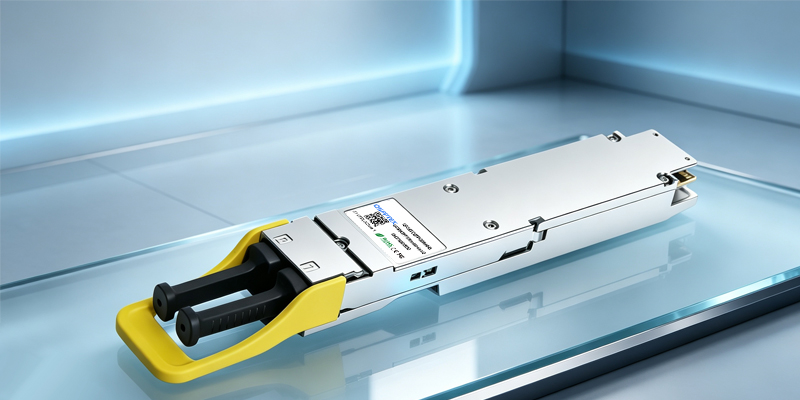
But how well physical AI can do this depends a lot on how good the technology underneath it is. Training on a large scale, high-fidelity simulation, and using multiple devices together all put a lot of pressure on the bandwidth, latency, and stability of the connections between computers. As a professional manufacturer of high-performance interconnect solutions, QSFPTEK has addressed the critical needs of AI training and inference by offering optical modules covering multiple speeds, including 1.6T InfiniBand, 800G RoCE, and 400G RoCE, along with interconnect accessories such as DACs and AOCs. They also provide a complete network architecture (InfiniBand and RoCE) and liquid cooling solutions to meet the physical AI infrastructure needs of different scales and application scenarios.
What is Physical AI?
Physical AI (also often called generative physical AI) is a class of intelligent technologies geared towards the real physical world, aiming to enable autonomous systems—such as robots and self-driving vehicles—to perceive, understand, and perform complex actions in their environment.
Unlike traditional AI, which mostly processes text, images or videos, physical AI uses three-dimensional spatial relationships and physical laws to make its model work. This means that the AI's output and decisions follow real-world rules such as gravity, motion, collisions and optics. It just makes sense that physical AI has to make sure that the results it generates are physically valid. For example, by adding physical limits, images and videos become more realistic in terms of how they move, the forces involved, and how consistent the scene is.
In robotics, physical AI makes it easier for the system to understand and interact with its environment. Traditional robots follow pre-defined rules to perform tasks, while robots based on physical AI can identify object attributes, predict motion trends, and make decisions and operations independently in complex, ever-changing environments. This means they can be used for more things.
How Does Physical AI Work?
The most important part of physical AI is the close integration of perception (how the system sees the world), reasoning (how the system decides what to do) and action (how the system performs the action). This enables automated systems to perform tasks safely and efficiently in real physical environments. This requires not only advanced algorithms but also high-precision simulation environments, reinforcement learning strategies, and multimodal data processing capabilities.
Multimodal Perception and Physical Understanding
Physical AI systems receive data from various devices such as cameras, LiDAR, and force sensors, while also collecting information about the environment. Unlike generative AI models, physical AI doesn't just look at the surface appearance of data. It focuses on analysing spatial relationships, object behaviour and physical laws. This helps it to form a deep understanding that can be used for decision-making and action execution.
For example, when a robot grabs an object, it needs to know what it is, how heavy it is, what its shape is, and how slippery it is, and then change how it grabs it so that it fits. This means that machines can deal with new situations and difficult tasks.
Simulation and Synthetic Data Generation
Collecting high-quality physical data in the real world is costly, risky, and inefficient. Therefore, physics-based AI heavily relies on highly realistic physical simulation environments to generate training data.
Using digital twin technology, virtual worlds can recreate motion, collisions and lighting changes in real-world scenes. This allows machines and sensors to interact within them. The resulting data, after being annotated and augmented, can be used to train models, enabling the system to accumulate rich operational experience before its formal deployment in the real world.
Reinforcement Learning and Policy Training
Physical AI systems usually use a process called reinforcement learning to teach robots to do things in a safe way. The system learns by trying and making mistakes, and it gets a reward for each correct step, which helps it to choose the right next action.
After many attempts, the robot gradually learns to do difficult things, like moving objects with a robotic arm, moving around on its own, or doing complicated tasks. After training, the model can be used in the real world, showing that it can adapt and work well.
Typical Application Scenarios of Physical AI
The main aim of physical AI is to allow intelligent systems to understand, perceive and react to the physical world. Using high-fidelity simulation environments based on physical laws, models can be trained safely and under controlled conditions. This makes them more adaptable and reliable in real-world scenarios.
Robotic Systems
Physical AI is making a big change in robotics. It is changing them from being devices that just follow fixed rules into intelligent systems that can see their environment and make decisions for themselves.
Autonomous Mobile Robots (AMRs): In places like warehouses, where there are a lot of things to think about, such as the movement of goods, AMRs use sensors to find their way and avoid obstacles. This makes sure that they can work well with people.
Robotic arms can change how they grip an object and how strong they are based on how the object is standing, how big it is, and what it's made of. This makes it possible to handle and move objects very precisely and keep them from shaking.
Surgical Robots: They learn to do very precise things like putting needles into body parts and sewing them up through training that uses simulations. This makes surgery safer and more comfortable.
Humanoid Robots: Integrating perception, reasoning, and motion control capabilities, they can interact with the physical world in various tasks and environments.
Intelligent Driving
In the field of autonomous driving, physical AI acts as a bridge connecting sensor perception and vehicle control. Systems based on "Vision-Language-Action" (VLA) models can be trained in high-precision physical simulation environments, making vehicles more stable when facing pedestrians, complex road conditions, and unexpected situations, and enabling them to smoothly complete critical operations such as lane changes.
Smart Spaces
For large spaces such as factories and warehouses, physical AI uses fixed cameras and computer vision models to track people, vehicles and robots all the time. This helps with planning the best route, detecting problems, and providing warnings quickly, making the operation safer and more efficient.
NVIDIA's full-stack strategy for physical AI
NVIDIA's strategic layout in the field of physical AI clearly goes beyond simply improving the performance of individual chips. Its core lies in building a full-stack technology platform "from computing to deployment," integrating development, training, simulation, and final implementation. This aims to provide general-purpose underlying technical support for the robotics and autonomous driving industries, rather than simply offering hardware solutions.
From an ecosystem perspective, this technology matrix spans several key layers. These include the Jetson series of processors for robotics and edge computing, the CUDA platform as the foundation for parallel computing, Omniverse—which focuses on digital twins and physical simulation—and an expanding suite of physical AI models and software tools. All these elements work together to form a complete workflow that covers the entire process, from algorithm development to system validation and deployment.
In terms of industry applications: Many leading robotics and industrial equipment companies—including Boston Dynamics, Caterpillar, Franka Robotics, LG Electronics, and NEURA Robotics—are currently leveraging NVIDIA’s software and hardware platforms to advance the development of autonomous systems and intelligent machines. These practical applications demonstrate that NVIDIA is systematically pushing physical AI towards platform-based development through a collaborative model of "model-tools-simulation-community".
At the model and tool level: At CES 2026, NVIDIA made its core physical AI assets available to the public for the first time, including the Cosmos world model platform, the autonomous driving inference model Alpamayo, and the Isaac GR00T vision-language-action (VLA) model for humanoid robots. Having these top-notch models and tools for developers means it's way easier for them to get into robotics and self-driving systems, giving everyone a shared starting point.
At the training and validation level: NVIDIA uses simulation technology to build a bridge between the virtual and the real world. Cosmos, as a learnable physical simulation platform, can generate high-fidelity virtual environments and massive amounts of synthetic data. This allows AI to undergo low-risk, high-frequency drills and tests before being officially deployed in the real world, directly addressing the pain points of scarce real-world data and high trial-and-error costs. For example, Cosmos Predict can quickly predict the evolution of complex physical processes, while Cosmos Reason supports multi-path logical reasoning before actual execution, improving the reliability of system decisions in complex scenarios.
In the field of autonomous driving: Alpamayo 1, a VLA reasoning model for the research community, can directly generate driving trajectories from video input and simultaneously output the logic behind the decisions, bringing higher interpretability to assisted driving systems. Currently, this technology is gradually being integrated into next-generation mass-produced vehicles, driving the true realization of AI-defined driving functions.
In terms of ecosystem building: NVIDIA has further enhanced platform stickiness through open-source and community collaborations. For example, they partnered with Hugging Face to integrate Isaac and GR00T into the open-source robotics framework LeRobot, thereby connecting a large community of robotics and AI developers. This strategy, centered on infrastructure and the development ecosystem, is gradually building a platform barrier with extremely high migration costs in the field of physical AI.
Conclusion
The emergence of physical AI is a big step for artificial intelligence, moving from "information intelligence" to "real-world intelligence". When AI can understand physical laws, think logically, and act, it'll really be in a whole other league, breaking free from the digital world and becoming a part of the real one. As tech gets better and better, industries like robotics, self-driving cars, smart spaces and industrial automation are going to grow a lot, making systems safer and more efficient in complex environments.


share

