


800G al server: collegamenti diramati e implementazione delle NIC nei cluster AI
Autore Leslie
Data 09/15/2026

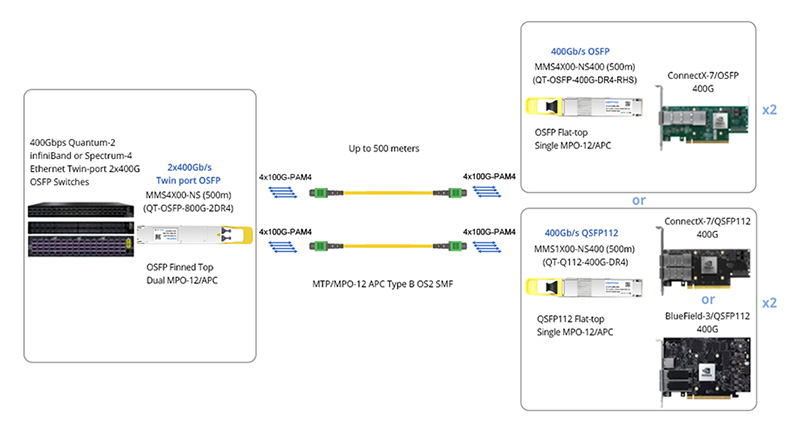
Poiché gli switch 800G vengono sempre più implementati nei cluster di AI, l'aggiornamento della rete core a 800G non significa necessariamente che il lato server richieda—o possa persino supportare direttamente—una connessione single-port 800G. Per i server che utilizzano PCIe 5.0 x16, la larghezza di banda I/O di un singolo slot PCIe impone vincoli al throughput effettivo delle NIC ad altissima velocità. Di conseguenza, il collegamento di NIC 400G o 200G alle porte ToR 800G tramite cavi breakout offre un approccio di implementazione più compatibile con le piattaforme server esistenti. In questa catena di connettività dall'alto verso il basso, l'attenzione deve estendersi oltre le semplici specifiche delle porte degli switch; fattori quali il consumo energetico dei moduli ottici, la perdita di segnale nei collegamenti breakout e le effettive capacità delle interfacce delle NIC server possono diventare variabili che limitano in ultima analisi le prestazioni del cluster.
Gestione dei vincoli termici nelle implementazioni di switch ToR ad alta densità
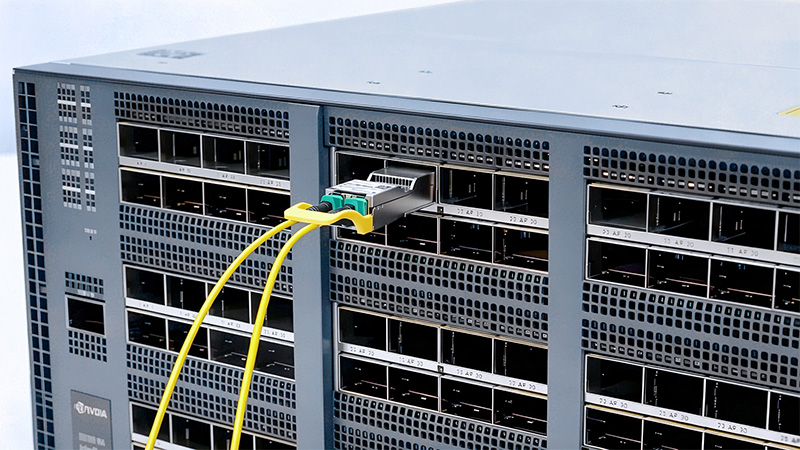
Quando le porte 800G sono configurate in modalità breakout per collegare più nodi di calcolo, aumentano sia la densità delle porte sul pannello frontale sia il consumo energetico aggregato dei moduli ottici; di conseguenza, la gestione termica diventa un fattore critico nella selezione dell'hardware. Ciò è particolarmente vero per switch 1U o 2U completamente popolati, in cui il consumo energetico dei moduli ottici stessi impone un ulteriore carico termico sull'architettura del flusso d'aria e del raffreddamento del sistema.
La tecnologia della fotonica al silicio offre vantaggi architetturali distintivi a questo riguardo. Prendendo QSFPTEK’s Moduli fotonici al silicio da 800G ad esempio, l'integrazione ad alto livello dei componenti ottici fondamentali—come i modulatori—su un chip basato sul silicio consente al modulo di emettere segnali PAM4 8x100G mantenendo un'efficienza energetica per bit superiore. Questo design altamente integrato contribuisce a controllare il consumo energetico del modulo, riducendo così il carico termico complessivo sul pannello frontale dello switch quando si collega un numero elevato di nodi server da 200G o 400G tramite più collegamenti breakout.
Controllo della perdita del collegamento fisico per i segnali PAM4 a 112G
Le connessioni fan-out dalle porte degli switch 800G alle NIC dei server si basano su bretelle in fibra MPO-MPO ad alta densità per il routing verticale all'interno del rack. A velocità di 112G per lane, i segnali PAM4 sono sempre più sensibili alla perdita sul collegamento e alla qualità delle connessioni.
Negli ambienti di cablaggio angusti e complessi nella parte posteriore degli armadi dei data center, i patch cord sono inevitabilmente soggetti a compressione o a raggi di curvatura ridotti. Se la perdita del collegamento supera il budget ottico del sistema, il tasso di errore sui bit (BER) al ricevitore può aumentare, compromettendo la stabilità del collegamento. Sebbene l'attenuazione introdotta dai singoli connettori e patch cord nelle reti ad alta velocità possa sembrare minima, deve essere rigorosamente controllata quando il budget complessivo del collegamento è limitato. Per questi ambienti ad alta densità, la scelta di patch cord fan-out con migliori prestazioni di curvatura e un'affidabile qualità delle superfici terminali contribuisce a ridurre al minimo le perdite aggiuntive legate al cablaggio; QSFPTEK offre soluzioni di cablaggio adatto a questi requisiti di alta densità. Per il traffico di addestramento AI—come RDMA/RoCEv2—that è altamente sensibile alla perdita di pacchetti e alla latenza, controllare la perdita a livello fisico è essenziale per garantire la stabilità dei protocolli dei livelli superiori.
Abilitazione dell'offload hardware e della sinergia lato host presso l'endpoint server
Una volta che i segnali ottici arrivano al pannello del server tramite i cavi patch e vengono sottoposti a conversione fotoelettrica, la responsabilità dell'elaborazione del traffico passa alla scheda di interfaccia di rete (NIC). Gestire un throughput di rete ad alta velocità—come 200G o 400G—senza meccanismi efficaci di offload dei protocolli costringerebbe la CPU host a consumare risorse significative per gestire gli interrupt di rete e lo spostamento dei dati.
Per affrontare questo problema, QSFPTEK’s 200G e NIC 400G dare priorità alle capacità di offload hardware. Nei cluster di addestramento dell'IA, la funzionalità RDMA della NIC’s riduce efficacemente il carico della CPU associato al trasferimento dei dati, diminuendo così il carico di elaborazione lungo il percorso di comunicazione. Un offload hardware efficiente non solo libera preziose risorse di calcolo lato host, ma contribuisce anche a controllare la latenza di coda della comunicazione end-to-end—un fattore critico per i carichi di lavoro di calcolo distribuito che dipendono dalla sincronizzazione dei parametri.
Conclusione
Man mano che le reti 800G si estendono al lato server, switch, moduli ottici, cavi patch breakout e NIC devono essere valutati come un collegamento end-to-end completo. Durante l'implementazione effettiva, l'attenzione dovrebbe essere posta sulla verifica delle configurazioni di breakout delle porte, del consumo energetico dei moduli, della perdita di collegamento e delle specifiche PCIe/NIC del server, invece di limitarsi a considerare la velocità della porta 800G dello switch.


Condividi
