


1.6T Transceivers: Market Trends, Drivers, and Future Opportunities

As AI and machine learning models keep growing, the need for high-speed connections in data centers is going up. Take the NVIDIA GB200 NVL72, for example. Its throughput of a single GPU is almost 800 billion bits per second, which puts a lot more strain on the network.
With so much activity, traditional network structures often can't handle large-scale data interactions reliably. If bandwidth can't keep up with the growth in computing power, it can cause a bottleneck, which slows down efficiency. The network bandwidth also needs to be increased. This makes it easier to use faster connection solutions, like 1.6T.
Driving Factors for 1.6T Development
With the continued expansion of large-scale models and hyperscale data centers, 1.6T-related products are experiencing a significant growth window. Among them, 1.6T optical modules are gradually becoming a key component of next-generation computing infrastructure. Their development is not driven by a single factor, but rather by a combination of factors.
Increasing AI Computing Power Demand
Large-scale training and inference scenarios are constantly raising the computing power threshold, thus increasing the demand for network bandwidth. Taking next-generation AI servers as an example, the demand for high-speed optical interconnects in a single system has reached a high level. For instance, an NVIDIA GB200 server under extreme configurations may require dozens of 1.6T optical modules. This scale of deployment directly drives the industry chain.
Continuous Upgrades in Data Center Architecture
Cloud vendors are continuing to invest more in AI data centers, which is making the overall network architecture use more bandwidth. As technology advances, 1.6T optical modules are becoming essential components, especially in large-scale AI clusters and network upgrades.
The Market is Entering a Phase of Accelerated Growth
From a market perspective, the overall scale of data communication optical modules has entered a growth phase. The global market size has continued to expand over the past few years and is expected to maintain a high growth rate in the coming years. Specifically in the 1.6T sector, demand is also rising rapidly, and is expected to reach millions in the short term, with market value growing in tandem. In some forecasting models, this scale may even expand further, demonstrating strong growth potential.
Overview of 1.6T Technology
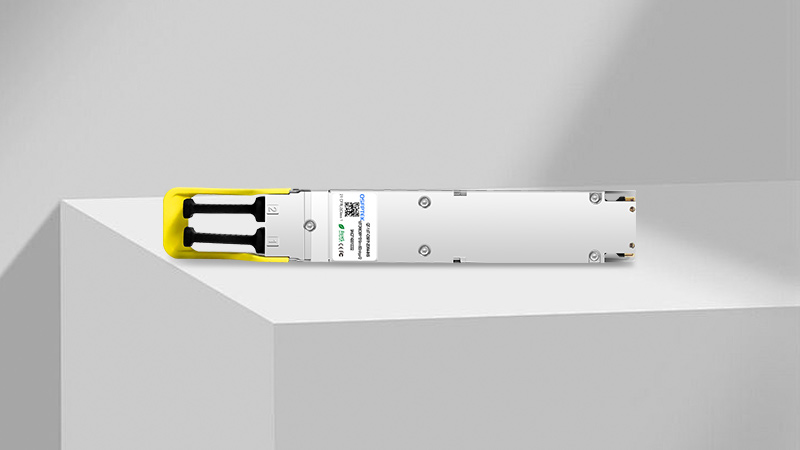
AI, machine learning, and high-performance computing are continuously pushing the limits of bandwidth and latency requirements. As a result, the 1.6T interconnect has evolved from an "optional upgrade" into a clear direction for evolution. However, doubling the bandwidth also puts new pressure on energy consumption and heat dissipation, and device integration.
Rate and Modulation Methods
From a basic parameter perspective, 1.6T corresponds to a total bandwidth of 1600Gbps. Currently, the mainstream implementation approach revolves around 200G per channel, using 8 parallel paths to achieve overall bandwidth splicing (8×200G). This also means that 200G/lane is becoming a key technology node at this stage.
Packaging Form Factors
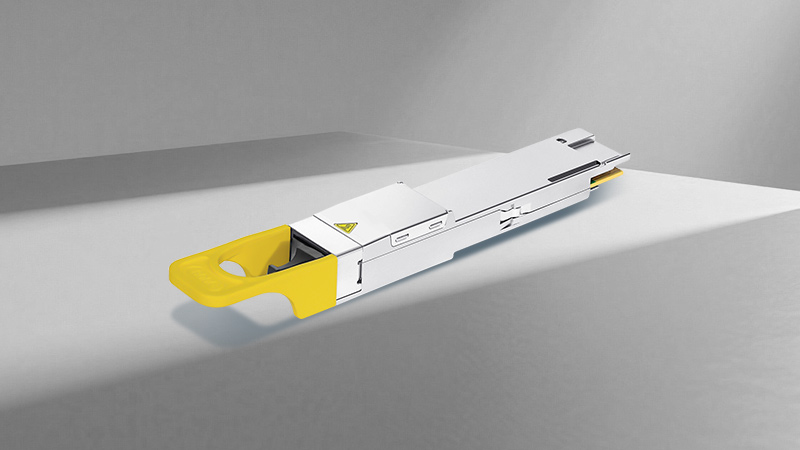
Module form factors vary significantly. OSFP-XD's larger size gives it more leeway in heat dissipation and structural design, allowing for more complex DSPs and optical engines. It currently holds a mainstream position and is the best solution for addressing the high power consumption issues brought by 1.6T.
In comparison, QSFP-DD struggles at this speed. Limited by its size, It has a small margin in terms of power consumption and heat dissipation, and is currently mainly explored in a few short-distance scenarios, with its overall application prospects remaining somewhat uncertain.
Evolution of Optical Technology Roadmaps
In medium- and long-distance transmission scenarios, single-mode solutions remain the mainstream, with core technologies mainly focusing on the choice between EML and silicon photonics (SiPh). EML, as a more mature solution, has advantages in stability, while silicon photonics offers greater potential in integration, power consumption, and potential cost control, thus becoming a key area of investment for major manufacturers.
Meanwhile, technology is improving too. Some of these technologies are LPO (Linear Direct-Drive Optical Module) and CPO (Co-Packaged Optics). The LPO has already started moving from theory to practice, while the CPO is still in the early stages and is expected to gradually enter pilot programs in the next few years. It's clear that these technologies are designed to address the crucial balance between power consumption and bandwidth in the 1.6T era.
Overview and Industry Distribution of 1.6T Optical Modules
Having clarified the speed, packaging form, and key optical technologies of 1.6T, the next more practical question is: how to translate these technologies into concrete product forms? Differences in technology combinations and design focuses have resulted in various types of 1.6T optical modules, each making trade-offs in power consumption, heat dissipation, transmission distance, and cost. Understanding these product forms helps to more intuitively grasp the current development direction of 1.6T technology.
Optical Module Product Forms and Manufacturer Layout
From a market distribution perspective, different types of 1.6T optical modules often correspond to different application scenarios. For example, solutions for short-distance, high-bandwidth interconnects emphasize port density and speed, while medium- and long-distance scenarios focus more on power consumption and transmission stability. Based on their respective technological accumulation and market positioning, mainstream manufacturers exhibit differentiated layouts in product planning, developing various products in parallel, from high-density short-distance interconnects to low-power single-mode solutions.
This distribution clearly shows the manufacturers' choices in technology paths. It also shows that the 1.6T market is still changing, with different solutions still being tested.
The Complementary Role of Cable Solutions
Cables are just as crucial as the optical modules themselves in the 1.6T system. The design of high-speed fiber or copper cable directly affects system bandwidth, link latency, and overall power consumption. It is clear that some manufacturers are developing 1.6T-related cable products to complement optical modules and provide more complete interconnect solutions for different scenarios.
Key Support from Upstream Optical Chips
Optical chip technology plays a fundamental role in overall performance further upstream. In the 1.6T stage, high-speed modulators, silicon photonics solutions, and EML lasers directly affect the module's bandwidth, power consumption, and transmission distance. Major optical chip manufacturers are launching solutions for different application scenarios to support higher-specification interconnect requirements around these core components.
From chips to modules, and then to the overall coordination at the system level, a relatively complete industrial chain structure has gradually been formed, which also reflects the continuous penetration of 1.6T technology in AI and high-performance computing scenarios.
Core Customer Groups for 1.6T Demand
Currently, the driving forces behind the development of 1.6T computing power are mainly concentrated in computing power demanders represented by AI data centers, and supercomputing systems prioritize bandwidth density and latency performance.
Computing power demanders, represented by large cloud vendors and AI platforms, are continuously raising their requirements for network interconnection. Companies like OpenAI, Microsoft, Google, Meta, Amazon, and domestic players such as Alibaba, Tencent, and ByteDance are all continuously increasing their investment in AI infrastructure construction.
For example, Meta's publicly disclosed plans mention that its next-generation AI data centers will adopt a rack-level cluster-like design, which will significantly increase its reliance on high-speed interconnection. For example, Microsoft and OpenAI are advancing the construction of ultra-large-scale computing platforms for training next-generation large models, which will almost inevitably lead to the introduction of higher-specification interconnect capabilities on the network side. Google's TPU clusters and the instance system corresponding to AWS's self-developed chips are also constantly driving up bandwidth demands. These scenarios essentially provide real-world application space for 1.6T.
Overall, these customers have a very direct need for high bandwidth and low latency, which most easily translates into pressure to upgrade optical modules, cables, and related chips.
Future Trends and Current Challenges
Technological Evolution Direction
Higher speeds remain the clear main theme. While 1.6T is gradually being implemented, higher specifications such as 3.2T have entered the R&D stage. The overall pace has not slowed down but rather continues to advance to meet the ever-increasing demand for data transmission.
The pressure is also evident in terms of cost. Copper cable solutions have always been cheaper for short distances. This has forced optical module manufacturers to focus more on cost control as well as performance. The most important thing is to "reduce costs without greatly affecting performance." This includes things like making processes more efficient, managing supply chains, and choosing the best technology routes.
The application scope is also gradually expanding. In addition to traditional data centers and AI scenarios, optical modules are beginning to enter automotive communications, 5G, and some more niche cross-disciplinary fields. Product forms are becoming more diverse, and some more integrated solutions are gradually emerging.
Industry Impact and Development Pace
As the technology path becomes clearer and supply chain cooperation accelerates, 1.6T is not just a simple bandwidth upgrade node but is also quietly changing the industry landscape. Manufacturers with technological accumulation and mass production capabilities are more likely to widen the gap, and market concentration may further increase. Simultaneously, upstream components and chips will also be driven. The advancement of 1.6T places higher demands on key optical components, which in turn promotes breakthroughs in related technologies. These changes will then feed back to the system side, such as the pace of data center construction and the implementation of AI applications.
Right now, 1.6T is still in the transition phase, moving from being adopted by a few people to being used by many. As the market grows, this specification is expected to be used more and more over the next few years, which will help optical communication evolve even more.
Potential Risks and Uncertainties
While recognizing the growth potential of 1.6T, some practical risks cannot be ignored. These factors will, to some extent, affect how quickly technology advances and how profitable the market will be.
Right now, the ecosystem, which is mostly made up of pluggable solutions, is pretty stable. But if new forms like CPO start being used more, it may affect the existing technological paths. When the industry changes its focus, the investments and supply chain layouts will need to be adjusted. These changes often happen quickly and directly affect the industry.
With the increase in participating manufacturers, price pressure is almost inevitable. Referring to the existing 800G market, prices have been declining year by year. 1.6T prices are currently still relatively high, but with increased production capacity and scale, a price drop is only a matter of time, and competition among manufacturers will intensify accordingly.
At the key component level, some high-end optical chips still rely on external suppliers, such as 200G PAM4 related components. Fluctuations in the external environment could affect the supply side, putting pressure on delivery schedules and cost control.
The current market depends a lot on a few big customers, especially large cloud providers in North America. Changes in how these customers buy things or in the outside environment could make the number of orders go up and down a lot. This would directly affect how well manufacturers do their jobs.
Conclusion
As AI training and inference scale up, the demands for bandwidth and energy efficiency in hyperscale data centers are also increasing. 1.6T optical modules are gradually becoming a key node in the next-generation optical interconnect system. From a technological evolution perspective, the industry is attempting to find a new balance between higher speeds, lower power consumption, and cost, focusing on OSFP-XD, CPO, and silicon photonics integration.
Judging from the deployment pace, in the next two to three years, as the technology stabilizes and production capacity accelerates, 1.6T is expected to see rapid deployment in AI clusters, cloud data centers, and high-performance computing scenarios. The overall trend is quite clear—it is not only a natural continuation of 800G, but also a realistic choice for achieving high-bandwidth interconnects in the AI era.
The real watershed may not be "who builds it first," but rather who can control performance, cost, and scale within a relatively reasonable range. In this regard, manufacturers like QSFPTEK are already deploying 1.6T optical modules and related interconnect products, trying to find a more suitable balance between high-bandwidth connectivity and infrastructure construction to support the continued expansion of subsequent AI computing platforms.


share

