




203 Topics
Sort by:
-
 Massive AI Workloads Are Coming: What Changes Is Data Center Infrastructure Undergoing?
As AI workloads expand across servers and racks, the final performance of the entire system increasingly depends on the coordinated operation of elements such as computing power, networking, storage, power supply, and cooling. This article will examine these changes and the practical challenges they bring to large-scale AI infrastructure.Moore 09/18/2026Read More >
Massive AI Workloads Are Coming: What Changes Is Data Center Infrastructure Undergoing?
Massive AI Workloads Are Coming: What Changes Is Data Center Infrastructure Undergoing?As AI workloads expand across servers and racks, the final performance of the entire system increasingly depends on the coordinated operation of elements such as computing power, networking, storage, power supply, and cooling. This article will examine these changes and the practical challenges they bring to large-scale AI infrastructure.Moore 09/18/2026Read More > -
 NVIDIA ConnectX-8 C8180 vs C8240: Architectural Differentiators and SuperNIC Selection for AI/HPC
This article will analyze two ConnectX-8 network card models with the same hardware and software baseline but with different port mapping and speed options. Provides a comprehensive overview of their technical variations and application scenarios to help network architecture teams make decisions that more closely fit their real-world networking needs.Moore 09/11/2026Read More >
NVIDIA ConnectX-8 C8180 vs C8240: Architectural Differentiators and SuperNIC Selection for AI/HPC
NVIDIA ConnectX-8 C8180 vs C8240: Architectural Differentiators and SuperNIC Selection for AI/HPCThis article will analyze two ConnectX-8 network card models with the same hardware and software baseline but with different port mapping and speed options. Provides a comprehensive overview of their technical variations and application scenarios to help network architecture teams make decisions that more closely fit their real-world networking needs.Moore 09/11/2026Read More > -
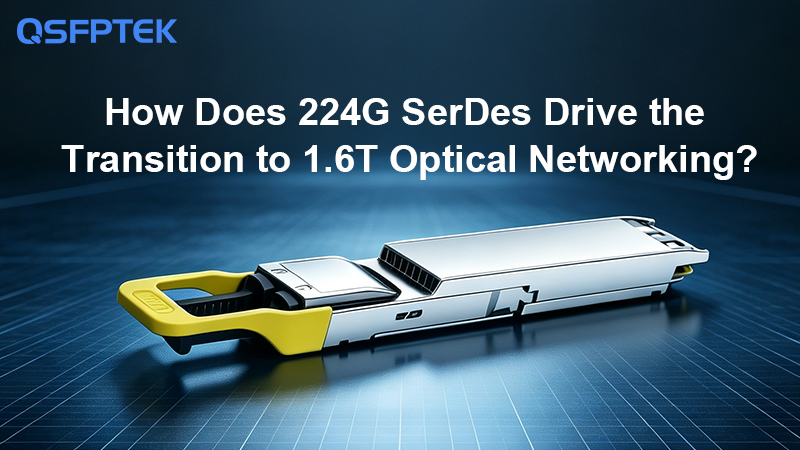 How Does 224G SerDes Drive the Transition to 1.6T Optical Networking?
Discover how 224G SerDes scales networks to 1.6T, breaking down signal integrity challenges and real-world 1.6T transceiver implementations.Moore 09/04/2026Read More >
How Does 224G SerDes Drive the Transition to 1.6T Optical Networking?
How Does 224G SerDes Drive the Transition to 1.6T Optical Networking?Discover how 224G SerDes scales networks to 1.6T, breaking down signal integrity challenges and real-world 1.6T transceiver implementations.Moore 09/04/2026Read More > -
 Unlocking 1.6T XDR: The New Cornerstone of Next-Gen AI Supercomputing
Explore the evolution to 1.6T InfiniBand XDR: key tech drivers, hardware architecture, AI cluster deployment value, and practical interconnect selection.Moore 08/28/2026Read More >
Unlocking 1.6T XDR: The New Cornerstone of Next-Gen AI Supercomputing
Unlocking 1.6T XDR: The New Cornerstone of Next-Gen AI SupercomputingExplore the evolution to 1.6T InfiniBand XDR: key tech drivers, hardware architecture, AI cluster deployment value, and practical interconnect selection.Moore 08/28/2026Read More > -
 AI Training vs. AI Inference: Why They Demand Different Network Architectures
As enterprises accelerate the adoption of AI, AI training and AI inference are increasingly appearing in the same infrastructure strategy. However, treating them as similar workloads can easily lead to pitfalls in network planning. In reality, the difference between training and inference goes far beyond the application levelMoore 08/03/2026Read More >
AI Training vs. AI Inference: Why They Demand Different Network Architectures
AI Training vs. AI Inference: Why They Demand Different Network ArchitecturesAs enterprises accelerate the adoption of AI, AI training and AI inference are increasingly appearing in the same infrastructure strategy. However, treating them as similar workloads can easily lead to pitfalls in network planning. In reality, the difference between training and inference goes far beyond the application levelMoore 08/03/2026Read More > -
 Understanding Physical AI: How AI Is Moving Beyond the Digital World
The following content will analyze Physical AI from several dimensions: its technological evolution, underlying operating mechanisms, typical application scenarios, and NVIDIA's full-stack strategy.Moore 07/20/2026Read More >
Understanding Physical AI: How AI Is Moving Beyond the Digital World
Understanding Physical AI: How AI Is Moving Beyond the Digital WorldThe following content will analyze Physical AI from several dimensions: its technological evolution, underlying operating mechanisms, typical application scenarios, and NVIDIA's full-stack strategy.Moore 07/20/2026Read More > -
 What is Next-Generation Supercomputing?
The focus of supercomputing is gradually shifting from simply increasing computing power to the deep integration of various computing paradigms. As a key driver in the industry, NVIDIA has unveiled its next-generation scientific computing platform built around Simulation, AI (Artificial Intelligence), and Quantum Computing.Moore 07/07/2026Read More >
What is Next-Generation Supercomputing?
What is Next-Generation Supercomputing?The focus of supercomputing is gradually shifting from simply increasing computing power to the deep integration of various computing paradigms. As a key driver in the industry, NVIDIA has unveiled its next-generation scientific computing platform built around Simulation, AI (Artificial Intelligence), and Quantum Computing.Moore 07/07/2026Read More > -
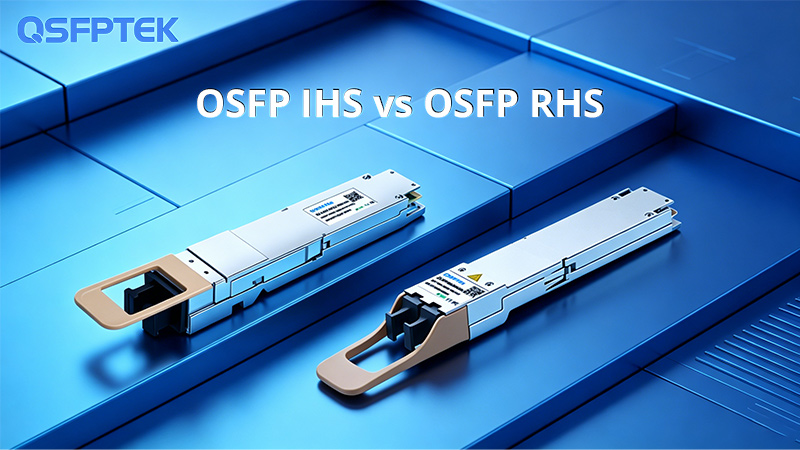 The Difference Between OSFP IHS vs OSFP RHS
OSFP IHS (Integrated Heat Sink) is an OSFP packaging solution that integrates the heat dissipation structure directly into the module body. And OSFP-RHS (Riding Heat Sink) is an OSFP packaging solution designed for high-power optical modules and advanced thermal architectures, often referred to as Flat Top OSFP.Moore 06/12/2026Read More >
The Difference Between OSFP IHS vs OSFP RHS
The Difference Between OSFP IHS vs OSFP RHSOSFP IHS (Integrated Heat Sink) is an OSFP packaging solution that integrates the heat dissipation structure directly into the module body. And OSFP-RHS (Riding Heat Sink) is an OSFP packaging solution designed for high-power optical modules and advanced thermal architectures, often referred to as Flat Top OSFP.Moore 06/12/2026Read More > -
 XPO Transceiver Overview: What is the Difference Between CPO?
This article will introduce what XPO (eXtra-dense Pluggable Optics) is, how this module works, and its main differences and applications compared to CPO.Moore 05/18/2026Read More >
XPO Transceiver Overview: What is the Difference Between CPO?
XPO Transceiver Overview: What is the Difference Between CPO?This article will introduce what XPO (eXtra-dense Pluggable Optics) is, how this module works, and its main differences and applications compared to CPO.Moore 05/18/2026Read More > -
 1.6T Transceivers: Market Trends, Drivers, and Future Opportunities
As AI and machine learning models keep growing, the need for high-speed connections in data centers is going up. The network bandwidth also needs to be increased. This makes it easier to use faster connection solutions, like 1.6T.Moore 04/17/2026Read More >
1.6T Transceivers: Market Trends, Drivers, and Future Opportunities
1.6T Transceivers: Market Trends, Drivers, and Future OpportunitiesAs AI and machine learning models keep growing, the need for high-speed connections in data centers is going up. The network bandwidth also needs to be increased. This makes it easier to use faster connection solutions, like 1.6T.Moore 04/17/2026Read More >
first
flipPage
last
