


What is Next-Generation Supercomputing?

The focus of supercomputing is gradually shifting from simply increasing computing power to the deep integration of various computing paradigms. As a key driver in the industry, NVIDIA has unveiled its next-generation scientific computing platform built around Simulation, AI (Artificial Intelligence), and Quantum Computing. Through innovative solutions such as the Vera CPU, proprietary high-speed optical interconnect technology, and the Apollo pre-trained physical model, NVIDIA is striving to create a unified computing framework that balances performance, energy efficiency, and scalability, providing new infrastructure support for future scientific research and large-scale AI applications.
The Three Major Computing Paradigms Are Converging
Over the past few decades, supercomputing development has primarily relied on numerical simulation to drive scientific research and engineering innovation by solving complex physical equations. However, the rapid advancements in artificial intelligence and quantum computing mean that future supercomputing platforms are moving away from single-computing architectures towards more diverse, converged ones.
One of the most important things for high-performance computing is scientific simulation. Traditional numerical simulation is still used for important calculations in areas such as climate forecasting, materials research and development, and fluid dynamics analysis. But AI can make things much better. It can do things much faster than before. It can do things that used to take a long time.
At the same time, artificial intelligence is becoming a vital productivity tool in scientific research. From generative AI to AI for Science, an increasing number of research institutions are leveraging AI to process massive amounts of experimental data, assist with model training, and accelerate the validation of research findings. AI is no longer merely an application-level technology but is gradually being integrated into the entire scientific computing workflow.
Quantum computing represents another development path worthy of attention. Although it is still in the early stages of commercialization, “quantum-classical hybrid architectures”—in which quantum computing works in tandem with traditional high-performance computing—have become a key area of exploration for the industry. In the future, certain types of complex problems may be accelerated by quantum computing, while traditional computing platforms will continue to handle large-scale general-purpose computing tasks.
Judging by current trends, future supercomputers will no longer stack computational power; instead, they will build a new generation of more efficient and intelligent computing platforms through the synergistic integration of scientific simulation, artificial intelligence, and quantum computing.
AI for Science is Rapidly Moving Towards Practical Applications
In the past, scientific research primarily relied on numerical simulations to reconstruct and predict the physical world. However, as data volumes continue to grow, traditional computational methods alone are increasingly unable to meet the demands of scientific research. Today, AI is gradually evolving from a supporting tool into a core research method, not only transforming how scientific problems are solved but also driving many research findings toward practical applications.
In climate research, the combination of AI and high-performance computing has already demonstrated remarkable efficiency gains. For example, the next-generation climate simulation platform based on the Earth-2 project can model global climate with 1-kilometer resolution and significantly shorten simulation cycles. Computational tasks that once took considerable time to complete now yield predictions much faster, providing more timely data support for extreme weather warnings and climate research.
Fluid dynamics is also one of the fields where AI acceleration is most evident. Traditional CFD simulations often take hours or even longer. Still, with the help of AI surrogate models and the Physics-NeMo framework, some complex flow field calculations have been compressed to just a few seconds while maintaining high accuracy. This efficiency gain is of significant value to aerospace, automotive design, and industrial manufacturing.
In nuclear fusion research, digital twin technology is a new development. By combining Omniverse with AI models, researchers can create digital replicas of fusion reactors in real time and predict plasma state changes very quickly. This helps to make experiments more efficient and creates a new way to explore the future commercialization of fusion energy.
AI technology is also widely used to predict earthquakes and tsunamis. Using information about past seismic activity, large AI models can quickly identify potential risks and estimate the likelihood of a tsunami in the moment. This method provides early warnings, which give people time to prevent or reduce the impact of a disaster.
At the same time, “AI for Science” is driving upgrades to global scientific research infrastructure. An increasing number of national research institutions are building new supercomputing platforms designed for AI. For example, Japan’s RIKEN is deploying a next-generation system based on the NVIDIA Blackwell architecture. Through the coordinated operation of GPU clusters, high-speed InfiniBand networks, and AI computing frameworks, this system provides a unified computing platform for scientific computing, quantum research, and AI training.
From predicting the weather to generating energy from fusion, and from testing how industries work to warning people about natural disasters, AI is increasingly used across all areas of scientific research. Instead of just making computers faster, it's more important to change how scientists discover. It lets researchers address complex problems more cheaply and quickly, and bring new scientific ideas into industry faster.
Hardware Architecture is Changing
To support the next generation of scientific computing, NVIDIA has also made several adjustments to its underlying hardware architecture. Judging from the next-generation supercomputing prototype showcased at SC25, future systems will no longer be simple combinations of CPUs and GPUs. Still, they will gradually evolve into complex platforms that integrate quantum interfaces, high-speed optical interconnects, and heterogeneous computing capabilities.
Self-developed CPU: Vera and Olympus cores
The new Vera CPU uses NVIDIA's special Olympus core design, which makes it almost twice as fast as the old Grace platform. Additionally, Vera introduces an LPDDR5X memory system designed for data centre environments. This system is optimised for bandwidth usage and energy efficiency, providing enhanced data processing capabilities for AI training, scientific simulations, and hybrid computing tasks.
CPO: Redefining Data Center Interconnection
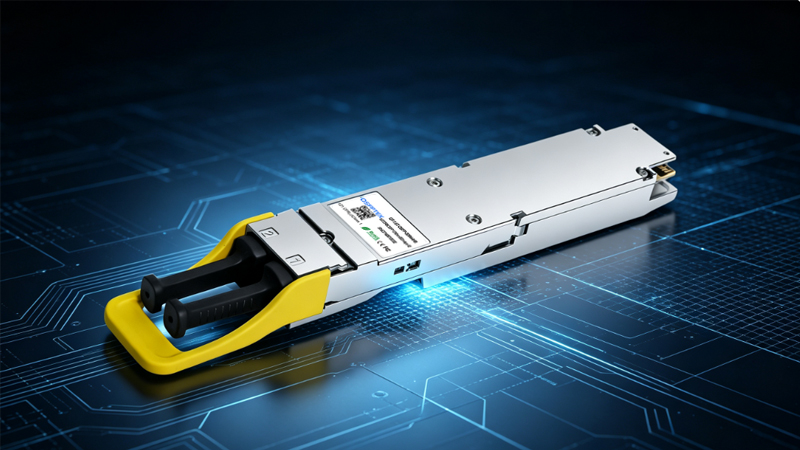
As AI clusters continue to expand, traditional pluggable optical modules are facing increasing challenges in terms of power consumption, maintenance, and failure rates. In response, NVIDIA has chosen a different development path—integrating the optical engine directly into the same package as the switch chip.
CPO (Co-Packaged Optics) is about more than just changing the shape of optical modules. It's a new way of designing the system as a whole. CPO does this by shortening the electrical signal transmission path. This reduces power consumption and improves interconnect efficiency. Overall, this provides a network infrastructure that can be scaled up for future hyperscale AI clusters.
According to NVIDIA’s announced plans, TACC, Lambda, and CoreWeave will be among the first to deploy the Quantum-X Photonics platform and will be the first to apply this technology to AI and high-performance computing infrastructure.
NVLink: Enabling Hundreds of GPUs to Work as a Single Unit
The significant improvement in inference performance achieved by the Blackwell architecture is not solely due to FP4 precision optimizations. An even more important factor is the continuous evolution of NVLink interconnect technology.
With the latest generation of NVLink, up to 576 GPUs can be connected into a unified shared-memory computing domain, enabling them to work together more like a single large computing system rather than a simple collection of hundreds of independent nodes.
For large-model training and inference, the efficiency of data exchange between GPUs often determines the upper limit of overall performance. As model sizes continue to grow, network bandwidth becomes just as important as computing power itself. For this reason, NVLink has become one of the key technologies underpinning large-scale AI infrastructure.
Apollo: AI Physics Models Enter the Pre-training Era
In addition to hardware upgrades, the software ecosystem is also evolving in parallel.
At the SC25 conference, NVIDIA officially launched the Apollo series of AI physics models, spanning multiple scientific computing fields, including fluid dynamics and structural mechanics. The introduction of Apollo signifies that engineering simulation is gradually shifting from the traditional “modeling from scratch” approach to a “pre-training + fine-tuning” model similar to that of large language models.
Apollo incorporates key AI physics advancements, including neural operators, Transformer architectures, and diffusion models. It also uses extensive prior physics knowledge during training.
Developers can not only use the officially provided pre-trained models directly but also perform secondary training and custom development based on their own scenarios, significantly lowering the barrier to building scientific computing models and accelerating the transition of scientific research findings from the laboratory to practical applications.
In a sense, Apollo is ushering scientific computing into a development phase similar to that of generative AI—researchers no longer need to build models from scratch every time. Still, they can. Still, they can instead rapidly iterate and innovate by building upon existing foundations.
Quantum Computing: Heterogeneous Integration May Become the Next Generation of Computing Paradigm
When it comes to quantum computing, NVIDIA’s approach is not to replace traditional computing platforms with quantum systems, but rather to have quantum processors work in tandem with GPUs as a key component of future supercomputing architectures.
GPU and QPU collaborative computing
According to NVIDIA, the QPU (quantum processor unit) acts as a specialized accelerator that complements the GPU. Through the unified CUDA-Q software platform, developers can schedule quantum and classical computing tasks in the same development environment, enabling these two types of computing resources to work together on complex tasks.
This means that researchers do not need to maintain two separate development systems: they can design quantum algorithms, perform simulation verification, and run simulations within a unified framework. This makes it much easier for people to get involved in quantum computing.
NVQLink: A Bridge Connecting Quantum and Classical Computing
To make it easy for quantum processors and GPUs to work together, NVIDIA has created NVQLink, which connects the two. This technology is essential for connecting QPUs and GPUs and supports large-scale quantum computing workflows driven by CUDA-Q.
In joint testing with Quantinuum’s next-generation Helios quantum processor, NVQLink achieved low-latency interconnection between the GPU and QPU and successfully validated the world’s first real-time decoding of scalable qLDPC quantum error-correcting codes.
The test results show that with error correction mechanisms in place, the system's fidelity can be kept around 99%, which is better than 95% without error correction. This shows that quantum error correction technology is actually useful in practice and that quantum computing can be used alongside traditional high-performance computing.
Given the current stage of development, quantum computing still has a long way to go before it can be applied independently at scale; however, it has already begun to demonstrate practical value as a coprocessor to GPUs in complex scientific computing tasks. Future supercomputing systems will likely no longer be a competition among single architectures, but rather heterogeneous converged platforms composed of CPUs, GPUs, and QPUs.
Conclusion
In the future, supercomputers will be built using a mix of CPU- and GPU-based designs, as well as hybrid systems that combine scientific simulation, artificial intelligence, and quantum computing. Technologies such as the Vera CPU, CPO optical interconnect, the Blackwell architecture, and NVLink/NVQLink help to increase bandwidth, reduce latency, and make it easier for resources to work together. At the same time, science-oriented AI platforms like Apollo are changing the way we do things. They use physical models that have already been trained to help with traditional methods.


share

