


Patch Panel vs Switch: Key Differences in Modern Network Infrastructure

In network cabling and equipment deployment, Ethernet patch panels and network switches are often mistakenly treated as interchangeable, and are even used interchangeably in some basic network discussions. However, when it comes to network architecture and physical-layer management, their roles differ. Patch panels are mainly used for centralized management and organization of the cabling system. Switches are responsible for data forwarding and network communication control.
To avoid confusion in network planning and equipment procurement, it is necessary to distinguish the functional positioning and application scenarios of these two types of equipment. This article will explain Ethernet patch panels and switches from the perspectives of technical roles, deployment locations, and actual usage, and provide a brief selection guide to help readers better understand and use these two types of equipment in typical network construction.
Patch Panel vs Switch: Why Are They Easily Confused in Actual Deployment?
In server rooms or low-voltage electrical rooms, Ethernet patch panels and network switches are often mistaken by beginners for the same type of equipment. This is largely due to their similar appearance. They usually use a 19-inch rack-mount design with one or more rows of RJ45 ports on the front panel. This makes it difficult to see what they are used for without devices connected immediately.
However, from a network architecture perspective, these two devices belong to completely different categories, playing roles at the cabling management and data forwarding layers, respectively.
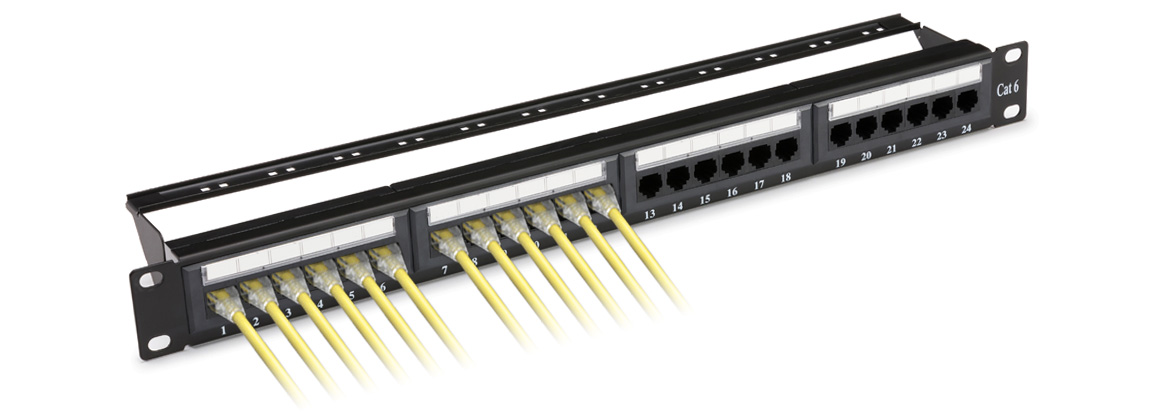
Ethernet patch panels are essentially passive cabling management devices, primarily used for the termination and centralized management of horizontal cabling. They do not participate in data processing or forward any data frames. All network cables from various points in the office area or server room terminate at the back of the patch panel, and are then uniformly labeled and connected via patch cords through the front panel ports. This structure makes the cabling system more standardized, facilitating label management, maintenance, and troubleshooting. In twisted-pair network environments, this type of device is usually called an RJ45 patch panel or network patch panel.
Unlike other network devices, network switches are proactive network devices that handle data exchange within a local area network (LAN). Switches build forwarding tables based on learned MAC addresses (or higher-layer network information) and determine the forwarding paths of data frames between ports accordingly. In addition to providing physical connections, switches support VLAN segmentation, QoS traffic policies, link aggregation, and other network functions. This makes them essential for ensuring network communication efficiency and traffic management.
In typical network deployments, switches are typically located after the patch panel: horizontal cables from terminal devices are first connected to the patch panel and then to the switch ports via patch cords, providing centralized access and aggregation of terminal traffic.
The Difference Between a Patch Panel and a Switch: Functions
Ethernet patch panels and network switches are different types of network devices. They are used for different things, located in different places, and affect network performance in different ways. From an overall network architecture perspective, patch panels primarily serve physical layer cabling management, while switches handle data layer forwarding and control tasks.
Firstly, their core roles are completely different. Ethernet patch panels are primarily used to terminate and centrally manage copper cable links, provide standardized interfaces for structured cabling systems, and enable unified management of cables from different information points at the front of the rack. In contrast, network switches are active forwarding nodes in a local area network (LAN). They build forwarding tables by learning MAC addresses or higher-layer network information. This enables data exchange and flow control between terminal devices.
Patch panels are passive devices. They require no power and do not detect or process data frames. They only connect cables and organize them. Switches, on the other hand, are active network devices that require power and internally perform data frame identification, processing, and forwarding, making them a core component of network communication.
Their impact on network performance also differs in their mechanisms of action. Patch panels themselves do not determine network transmission speed. The performance of their links depends mainly on the type of cabling used, such as Cat5e, Cat6, or Cat6a. As long as patch panels are installed correctly, they usually don't have much of an impact on signal strength. Switches, on the other hand, directly determine the speed of network ports and the overall forwarding capacity, such as 100 Mbps, Gigabit, 10 G, or higher bandwidth, while also affecting network throughput and data processing efficiency.
From a practical value perspective, the core function of patch panels is to improve the manageability of the cabling system. Keeping all the cables in one place and labeling them makes it easier to maintain the equipment and reduces the risk of malfunction when moving, adding, or replacing equipment. Network Switches are valuable because they optimize network performance and traffic management. This includes optimizing bandwidth usage, minimizing data misdirection, partitioning VLANs, and implementing Quality of Service (QoS) policies. These features help control the network more precisely.
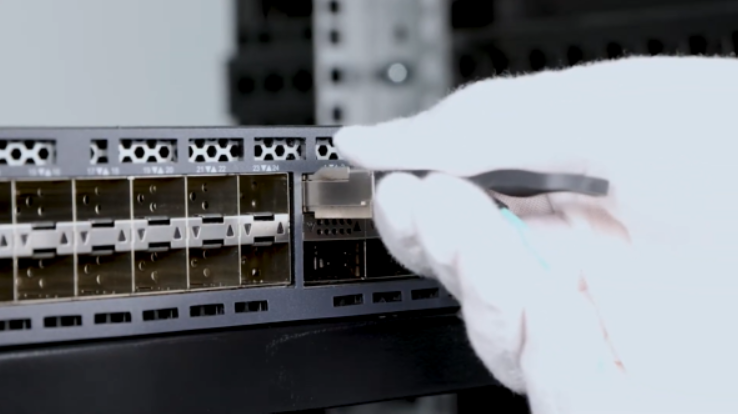
When it comes to where they're used, both usually go in the same cabinet or data center, but they're not in the same place. In terms of physical placement, both are usually located in the same cabinet or data center, though they occupy different positions. Patch panels are usually installed at the front of racks or at the entry point of the cabling system. They connect horizontal cabling to network equipment. Switches connect to patch panels via short patch cords, which aggregate and forward traffic from end devices, thereby forming a complete network transmission.
Patch Panel vs Switch: How to Choose in Actual Networks?
Once the functional differences between Ethernet patch panels and network switches are understood, network planning typically focuses on two areas: prioritizing data forwarding capabilities and network functionality or prioritizing cabling management and rack organization. Different deployment goals often correspond to different equipment selection priorities.
When Network Performance and Traffic Control are Core Requirements
If the main goal of network construction is to achieve device interconnection, improve bandwidth utilization, and effectively manage service traffic, selecting a suitable network switch should be a priority. In a typical LAN environment, switches perform critical data exchange. For example, they provide access ports and uplinks for terminal devices. They also learn MAC addresses or use higher-level forwarding logic to send data across the network efficiently.
Modern switches usually have different network management features. Some examples are VLAN segmentation, QoS traffic priority control, and Access Control Rules (ACLs). These capabilities allow network administrators to manage traffic with great precision according to service requirements. Therefore, in performance- and network functionality-oriented scenarios, equipment selection usually requires focusing on key indicators such as the number of ports, interface speeds, backplane bandwidth, and management capabilities of the switch.
When Cabling Management and Rack Organization Become More Important
In another scenario, network planning focuses not only on how data can be sent, but also on keeping cables neat and orderly in the rack and making room for future expansion and maintenance. As the number of data points increases, or when the network requires long-term stable operation, introducing Ethernet patch panels can significantly improve the manageability of the overall cabling system.
For example, a 24-port patch panel can connect cables from different rooms or work areas at the front of the rack, with all connections visible on a single panel. Use patch cords to connect ports to different switch ports, enabling device access and facilitating network maintenance. Clear port labeling and numbering systems allow network administrators to identify problematic links during troubleshooting, reducing maintenance time quickly.
In most business network settings, these two types of devices are used together, not instead of each other. Patch panels are used mostly for physical layer cable termination and organization, while switches are used for data layer traffic forwarding and network control. Through this division of labor, the network can maintain clarity and order at both the physical structure and logical architecture levels, and is easier to expand in the future.
FAQs: Patch Panel and Switch Deployment in Real-World Networks
Can Patch Panels Be Deployed Alone in Small Networks?
In small networks with few devices and short connection distances, you can connect network cables directly to network switches. This means you don't need Ethernet patch panels. However, as the number of data points increases, relying solely on direct connections to switches can lead to disorganized cabling within cabinets. This can make it harder to maintain and adjust the system later on. Using Ethernet patch panels consolidates all cables into one place, making it easier to manage, standardize, and maintain. It also makes the cabinets look better.
When is a High-Density RJ45 Patch Panel Necessary?
When a single rack needs to accommodate a large number of data points, and available rack space is limited, a high-density RJ45 patch panel becomes a more suitable choice. These devices can provide more ports within a limited rack unit (RU), thereby improving port utilization while maintaining a clear structured cabling layout. For scenarios requiring centralized management of numerous copper cable links in a server room or data center environment, high-density patch panels can save space while maintaining good cabling organization.
How to plan the number of ports on patch panels and switches?
During the network planning phase, estimates are typically made based on the current number of information points or devices, with some expansion space reserved. A common practice is to add approximately 20%–30% port redundancy so that new terminal devices do not require immediate equipment replacement. Therefore, when selecting Ethernet patch panels and network switches, it is generally recommended to choose models with slightly more ports than current needs to improve network scalability and reduce the frequency of future upgrades.
Is an Ethernet patch panel still needed when both copper and fiber optic links exist in the rack?
In network environments that use both copper and fiber-optic links, patch panels remain important. You can connect copper links to Ethernet patch panels, and fiber-optic links are usually managed through separate fiber-optic patch panels. Subsequently, both types of cabling systems can be connected to network switches via appropriate copper or fiber optic patch cords to achieve unified network access and traffic aggregation. This layered cabling structure maintains clear cabling within the cabinet while facilitating unified management and expansion of network devices.
Conclusion
Patch panels and network switches play different roles in a network. Ethernet patch panels connect network cables, making cable management easier by providing standard interfaces. And the network switches are responsible for sending data between devices on a local area network, or LAN. They help devices send and receive data by forwarding it and controlling the network.
To meet different network deployment needs, QSFPTEK offers a range of Ethernet patch panel products, including blank patch panels for flexible port configurations and pre-configured Cat5e, Cat6, and Cat6a copper patch panel solutions. Users can deploy based on their actual cabling scale and network architecture requirements, combined with appropriate network switch models, to build a clear, easily expandable structured cabling system.


share

